Energy-Efficient Optimization of Heterogeneous Wireless Sensor Networks Using a Two-Phase Genetic Algorithm
A detailed explanation of how a two-phase genetic algorithm improves sleep scheduling, routing, and clustering to extend the lifetime of heterogeneous wireless sensor networks.
Rakshith
Writer & Explorer
Energy-Efficient Optimization of Heterogeneous Wireless Sensor Networks Using a Two-Phase Genetic Algorithm
Wireless Sensor Networks (WSNs) are used everywhere today — in agriculture, traffic systems, environmental monitoring, smart cities, and even wildlife tracking. They collect real-time data through small sensor nodes spread across large areas.
But they have one huge problem:
⚠️ The Biggest Enemy of WSNs: Battery Life
Most sensor nodes run on tiny batteries. They are placed in forests, mountains, buildings and remote areas. Changing or recharging them is often impossible.
So if one important node dies early, the entire network becomes weak. If many nodes die early, the network collapses.
This is even more critical in Heterogeneous Wireless Sensor Networks (HWSNs) — where we have:
- Normal nodes → low energy
- Super nodes → high energy (they act as cluster heads)
But even super nodes drain out quickly because they have the heavy responsibility of:
- Collecting data from normal nodes
- Processing the data
- Sending it to the Base Station (BS)
So the main question is:
❓ "How do we make the network survive longer while using the same battery?"
This is the exact problem the research paper aimed to solve.
🧠 The Core Idea of the Research
The research introduces a Two-Phase Genetic Algorithm (GA) approach to improve:
✔️ Sleep scheduling
Deciding which super nodes should stay awake and which should rest (sleep mode).
✔️ Routing
Building the best multi-hop path so data travels efficiently.
✔️ Clustering
Grouping normal nodes under the best possible super nodes (cluster heads).
By combining all three together, the algorithm creates a more intelligent network that saves energy and survives much longer.
🧩 Phase 1: Smart Sleep Scheduling + Routing Tree
The algorithm first decides:
- Which super nodes must stay awake (others sleep)
- How they connect with each other to build a routing tree
✨ Unique idea:
The network is divided into rings around the Base Station.
Each ring wakes up an equal number of super nodes.
This ensures:
- Coverage is uniform
- No region becomes "empty"
- No super node is overloaded
🧩 Phase 2: Clustering Normal Nodes
After deciding awake super nodes and building a routing tree, the algorithm assigns normal nodes to the best possible cluster heads.
It tries to:
- Distribute normal nodes evenly
- Avoid overloading any single super node
- Reduce communication distance
- Save energy during data transmission
⚙️ How the GA Solves the Problem
The GA uses:
- Custom chromosome structure
- Specialized selection, crossover and mutation
- Energy-aware cost functions
- Repair operations to maintain valid trees
- Probabilistic selection based on remaining energy
📊 Results of the Proposed Method
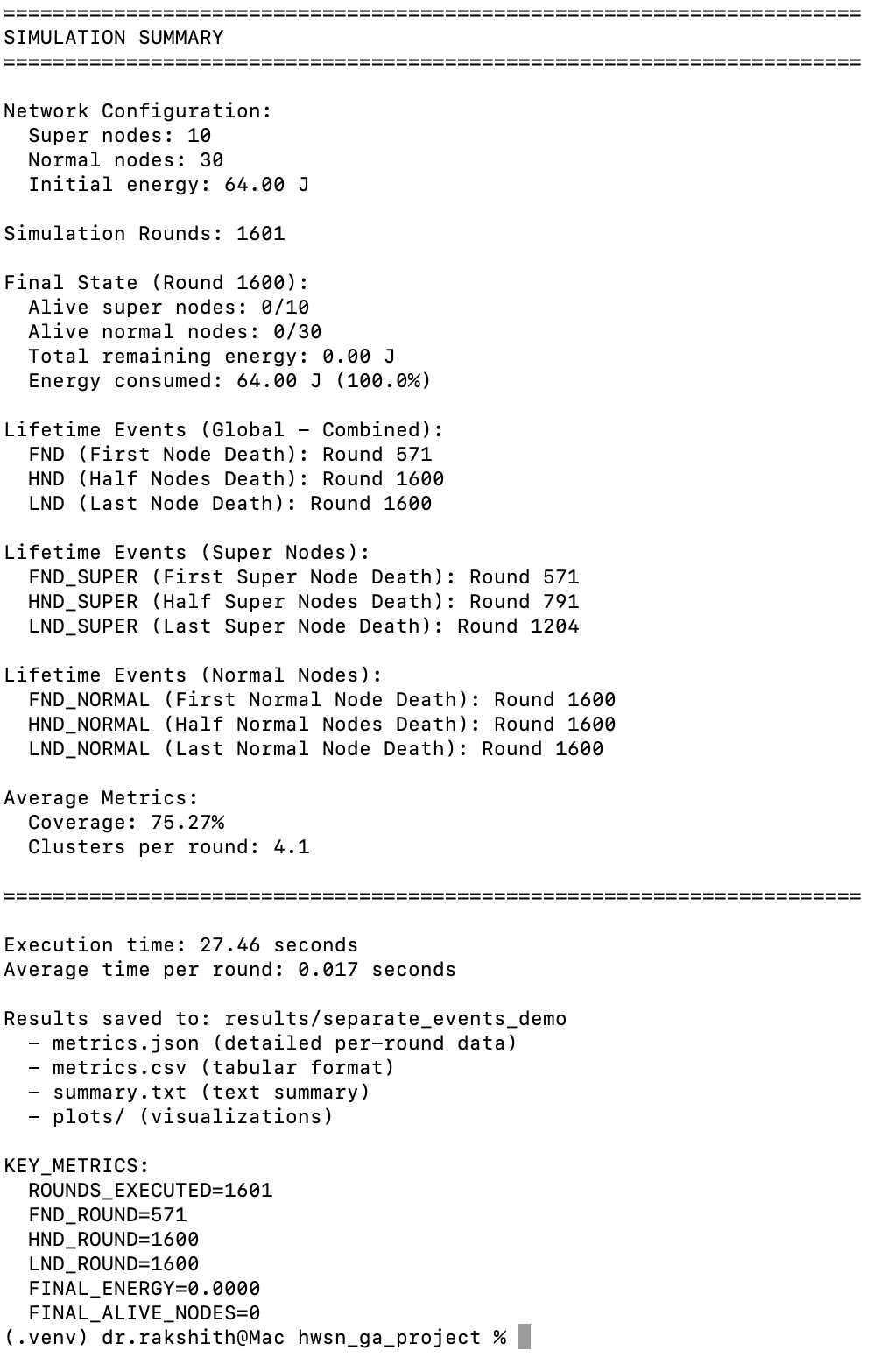
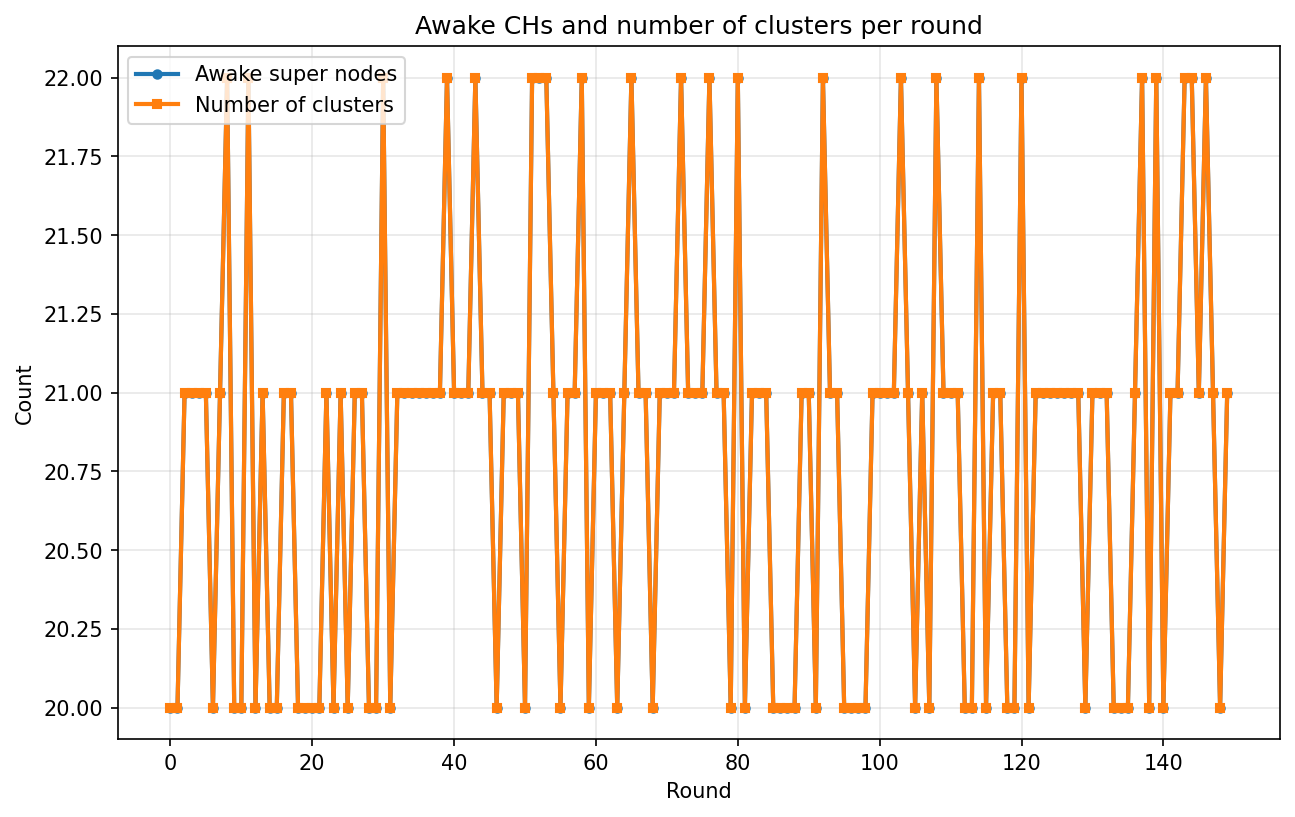
1️⃣ Improved Cluster Stability & Coverage
Coverage remains consistently higher than competing algorithms.
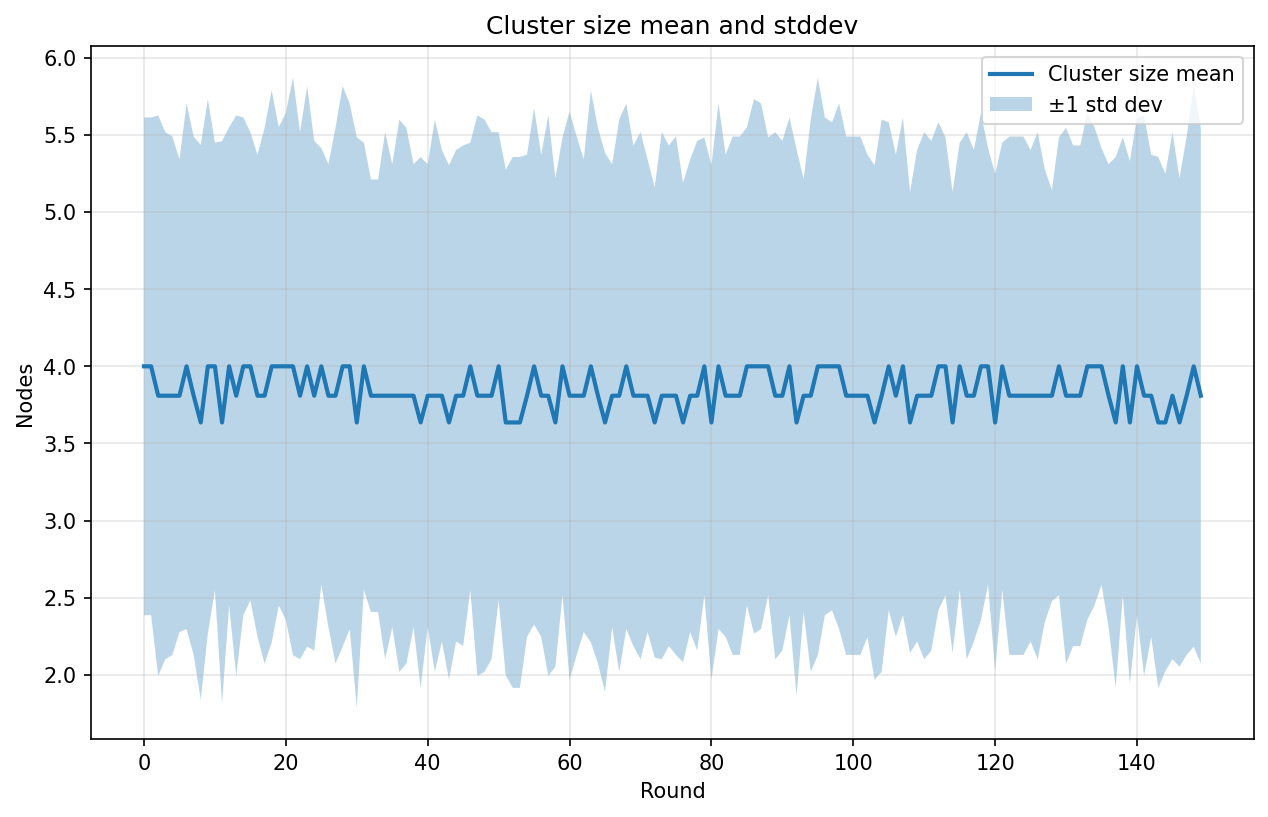
2️⃣ Balanced Cluster Sizes
Cluster sizes remain stable, consistent and efficient.
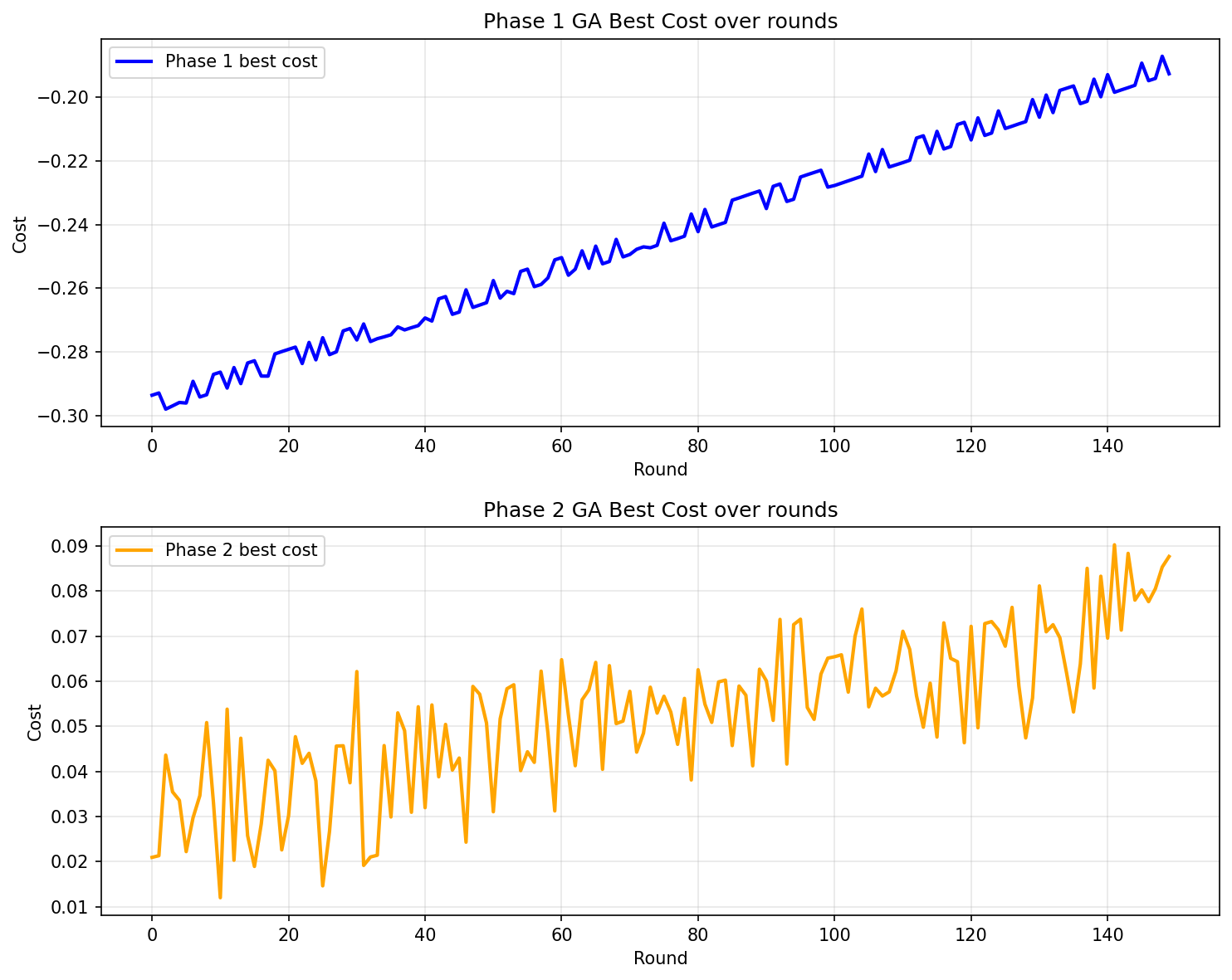
3️⃣ Better GA Cost Optimization
Phase 1 and Phase 2 GA cost improvements can be seen clearly.
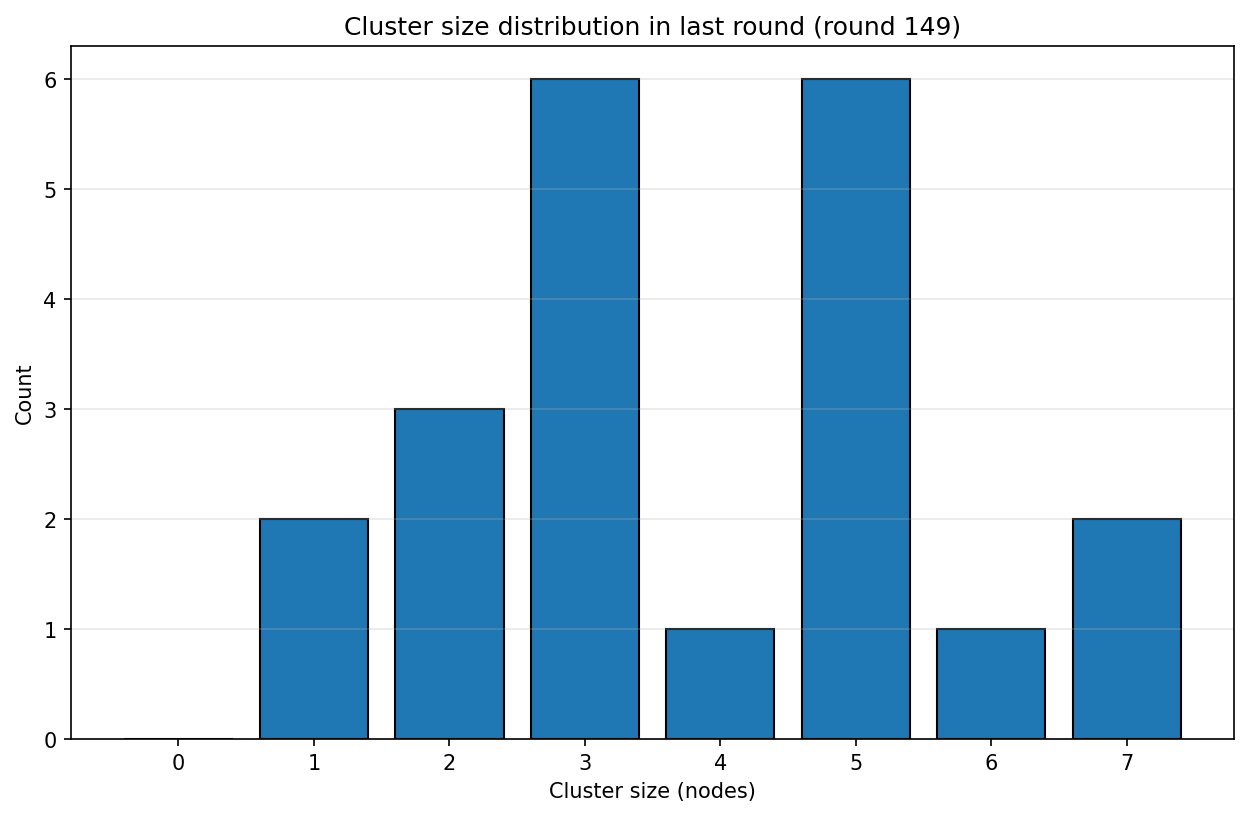
4️⃣ Final Cluster Distribution
The distribution of cluster sizes at the final round indicates healthy balance.
🧑💻 Project Source Code (GitHub Repository)
If you want to explore the full implementation, experiment with parameters, or reproduce all the graphs:
This repository includes:
- Complete Python code
- Genetic Algorithm implementation
- Sleep scheduling logic
- Clustering logic
- Routing tree generation
- All plotting scripts
- A clear README
🧾 What Problem Did We Actually Solve?
This project solves three major problems in WSNs:
✔️ Unbalanced energy consumption
Some super nodes earlier used to die faster.
Now energy load is spread evenly.
✔️ Poor coverage
Sleeping nodes sometimes left regions uncovered.
Now every ring guarantees awake nodes.
✔️ Short network lifetime
The network usually died early due to poor scheduling.
With the new method, lifetime extends by hundreds of rounds.
About Rakshith
Hi, I'm Rakshith — a tech educator, storyteller, and founder exploring the worlds of engineering, travel, wellness, and creativity. I believe learning doesn't stop at the classroom or the screen — it continues on highways, in temples, at beaches, and during quiet reflections. This space is my archive of experiences, experiments, and everything that makes life meaningful.
Enjoyed this article? Share it with others!
You Might Also Like

Inner Engineering: How I Went from a Sceptic to Sobbing Like a Toddler (and Loving It)
If you had asked me in early 2024 what I thought about Sadhguru and Isha, I would have given you the standard 'logical engineer' answer. Here's how everything changed.

Ramadevarabetta: The Hidden Gem I Somehow Missed for 30+ Years
We humans are funny creatures. We travel thousands of kilometers to explore nature… but completely ignore the beautiful places sitting quietly in our own backyard. Here's how I discovered Ramadevarabetta after 30+ years.
A Simple Memory Game — A Fun Project to Learn Frontend Logic
A beginner-friendly memory game project built using JavaScript that teaches DOM manipulation, state handling, and frontend logic, including leaderboard, timer, and matching mechanics.
Comments
Leave a Comment
Loading comments...